
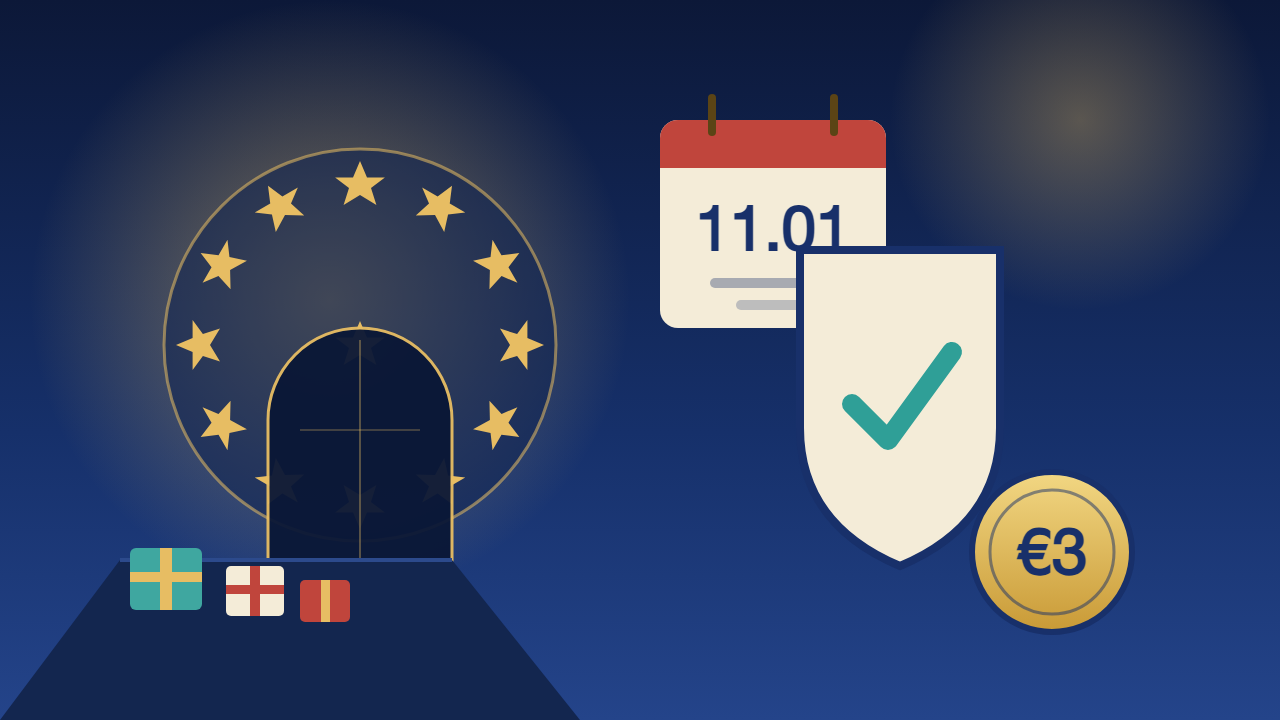
There are fewer than four weeks left until 1 November. From that date, customs declarations for low-value consignments imported into the European Union must carry a product identifier (PID), the code that allows customs authorities to trace a product’s origin and assess its risk. Declaring a PID has been possible on a voluntary basis since 1 July; after the deadline it becomes compulsory. For sellers running European storefronts, this is not another advisory item to skim past. It is a timetable that is already counting down.
Three measures arrive in the same year
The timeline is worth setting out carefully.
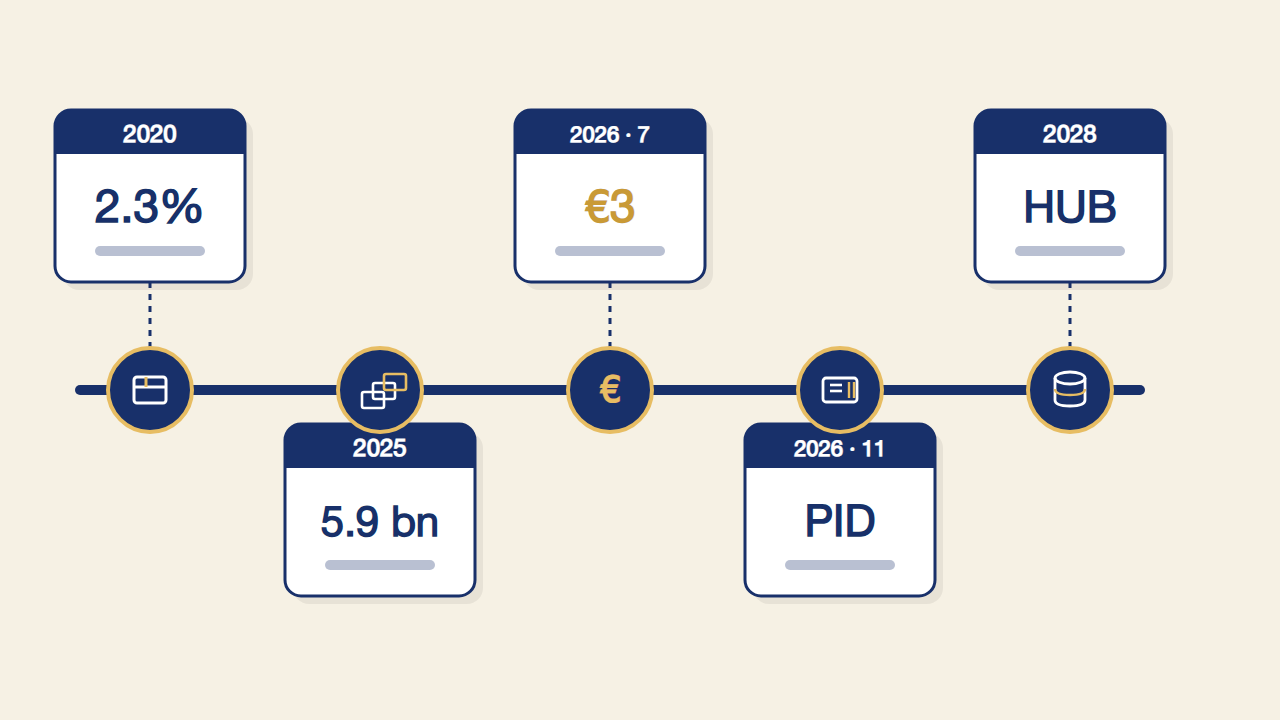
On 1 July, the EU abolished the long-standing customs-duty exemption for parcels worth up to €150 and replaced it with a flat temporary duty of €3 per item, under Council Regulation (EU) 2026/382. The fixed charge runs until 1 July 2028, when the EU Customs Data Hub is expected to be in operation and ordinary, product-specific duties will take over.
On 1 November, the product identifier moves from voluntary to mandatory, and the separate e-commerce handling fee is due to be set later this year. When EU institutions agreed the wider customs reform in March, they also established that platforms and sellers facilitating distance sales will be treated as importers: they must be established in the EU or represented by an entity holding authorised economic operator (AEO) status, and persistent offenders face fines of up to 6% of the value of the goods imported.
Then there is the European Product Act, a draft of which leaked at the start of October. Under the proposals, a marketplace must verify a valid digital product passport or product responsibility record before allowing a listing; if it fails to do so, the platform itself becomes the product’s de facto authorised representative, with all the obligations that brings. When a market-surveillance authority orders a removal, the platform must act within two working days. Penalties again range from 1% to 6% of worldwide turnover, and the Commission is explicitly empowered to deploy web crawlers that identify non-compliant listings automatically.
The target is the model Chinese sellers know best
None of this has appeared from nowhere. According to the European Commission, almost 5.9 billion low-value items were shipped directly from third countries to EU consumers in 2025 without customs duties being paid. Inspections carried out across the EU-27 last year covering cosmetics, personal protective equipment, food supplements, toys and electronics found that over 60% of checked products failed EU standards, with failures clustered around missing labels, forbidden ingredients and absent safety documentation.
ECDB’s figures give the other side of the picture. EU consumers spent €421 billion online on physical goods in 2025; €55.1 billion of that, or 13.1%, went to sellers outside the Union, and 90.2% of the €55.1 billion went to Chinese storefronts on Temu, Shein and AliExpress — around €49.7 billion. In 2020 the equivalent share was just 2.3%; ECDB expects 15.2% in 2026. The “low-value, direct-dispatch” model the reform is aimed at, in other words, is precisely the route on which Chinese cross-border e-commerce has grown fastest over the past five years.
After the turning point, compliance is both cost and ticket of entry
The arithmetic facing sellers is straightforward. Every item becomes €3, plus a handling fee, more expensive; without a PID and the right compliance records, consignments can be stopped at the border; and platforms, protecting themselves, will tighten listing rules earlier than the regulators require. On a shipment of 1,000 items, the flat duty alone comes to €3,000, before documentation and platform-review costs are counted. The room for a strategy built on low prices, high volume and labels translated as an afterthought is shrinking fast.
It is worth noting that two of the three most common reasons for failing inspection — missing labels and missing safety documentation — are language problems. Product labels, instructions, declarations of conformity and safety data sheets all have to be supplied accurately in the languages of the destination countries, and that is not a job for a passing favour. How we help clients assemble that paperwork is set out in “The Clock Is Running on EU Compliance: Building a Multilingual Document Pack for Sellers”, while “A New Opening for Translators in the Compliance Era” looks at the same shift from the translator’s side. If you have manuals or compliance files in the queue, our document translation page sets out how we handle them.