

The most immediate sign of the EU’s compliance tightening is in our assignment lists: product manuals, warning labels, declarations of conformity and safety data sheets — the briefs carrying the word “compliance” have grown noticeably in number. As our industry piece set out, product identifiers become mandatory on 1 November, the leaked European Product Act forces platforms to verify digital product passports, and sellers have to prepare multilingual paperwork in advance. For translators and newcomers, this is new work that pays better and repeats more reliably, but its barriers are genuine. Based on what we see when reviewing jobs, here are the five capabilities worth building.
1. Read the framework, not just the sentences
Compliance text has one defining feature: every term sits inside a body of rules. CE marking, the EU declaration of conformity (DoC), harmonised standards, digital product passports, REACH and the various product directives — a translator need not become a regulatory specialist, but should know where a document sits in the process, and must not mistype directive numbers or years, or treat “regulation” and “directive” as interchangeable. When a field is unfamiliar, half an hour spent with the public guidance of the destination country’s authority is time that cannot be skipped.
2. Precise terminology and a sense of risk
A marketing line rendered a little softer or firmer changes a conversion rate; an error in compliance text changes whether goods clear customs and where liability sits if an incident occurs. “Warning” and “caution” carry different degrees of seriousness, and age ranges, ingredient limits and voltage figures must not shift by so much as a digit. The method is plain: build a glossary for each project, and flag uncertainties for confirmation with the client rather than choosing something that “looks close enough”.
3. Work with MTPE and CAT tools
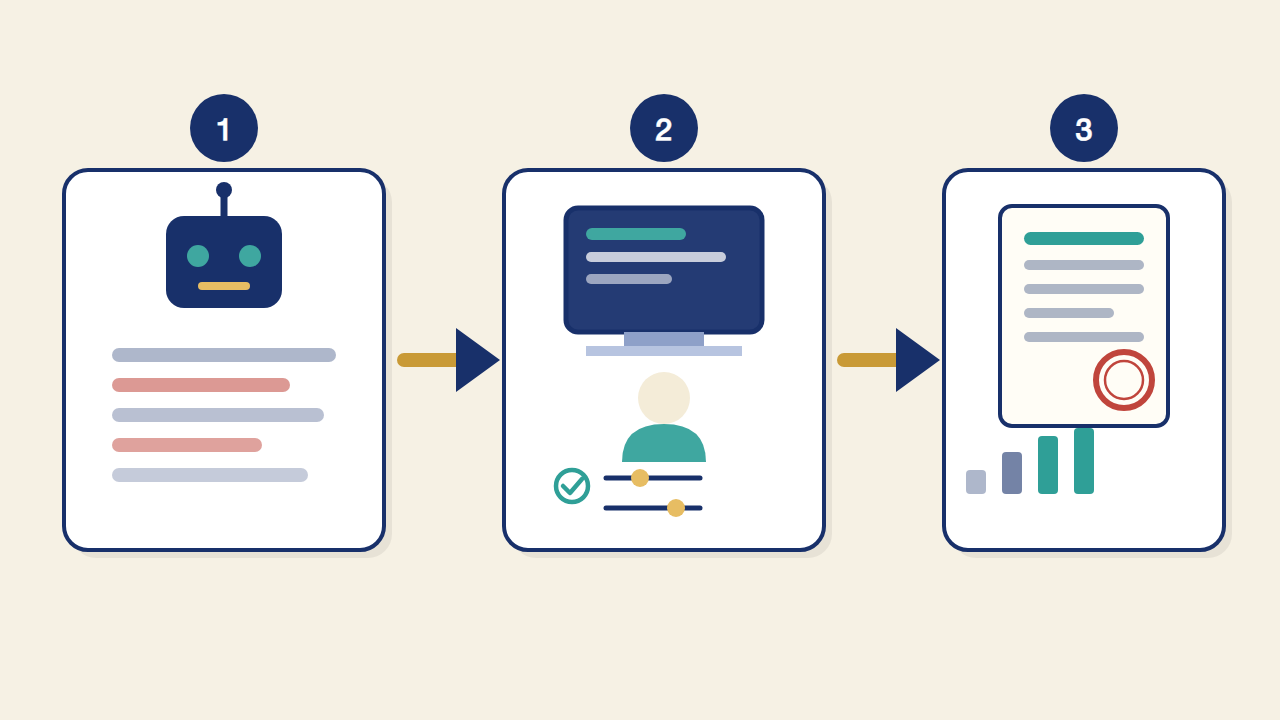
Compliance files come in many versions with high repetition: five language versions of one product, a fresh edition the following year when the model changes. The standard industry approach is a machine first draft with graded human review, supported by computer-assisted translation tools such as Trados and their translation memories. Resisting the machine serves little purpose; the real difference between translators lies in review judgement — which machine sentences can pass and which terms or structures need reworking. Translators fluent in the workflow take on more work in the same time, and earnings move upwards rather than down. Our MTPE page explains how the process runs in practice.
4. Handle e-commerce content with a localiser’s mind
Compliance work arrives together with listing localisation: titles, bullet points, detail pages, size charts and returns notes. This is not word-for-word work. Inches become centimetres; plug types, voltages and certification marks need completing for the destination country; punning or exaggerated promotional lines become formulations local shoppers accept. The job is to write as someone helping the client sell in that market, not simply to convert between two languages.
5. Commit to one vertical sector
The most valuable part of compliance translation is sector knowledge, and it cannot be acquired by memorising vocabulary. Newcomers do well to choose one direction — consumer electronics and small appliances, toys and children’s products, or cosmetics — and over several projects build up that sector’s framework, its common standards references and a personal termbase. Food supplements and medicine leaflets lead further into medical translation; contracts, patents and authorised-representative agreements belong to legal translation, with higher barriers and higher rates. Once that vertical depth exists, clients return with the next job and the one after — a stability generalist work rarely offers.
In one sentence, the compliance era rewards language, tools and one field understood properly. For the trend itself, see “Four Weeks to 1 November: Mandatory Product Identifiers and the Turning Point for Low-value Parcels”; for how companies put it into practice, see “The Clock Is Running on EU Compliance: Building a Multilingual Document Pack for Sellers”. Those two checklists, together with this one, give newcomers a clear route in.